


 3:20 AM
 nasrou

Running to
lose weight is possible - but running 3 miles a day will not help you if you
don't know keep your diet in check too.
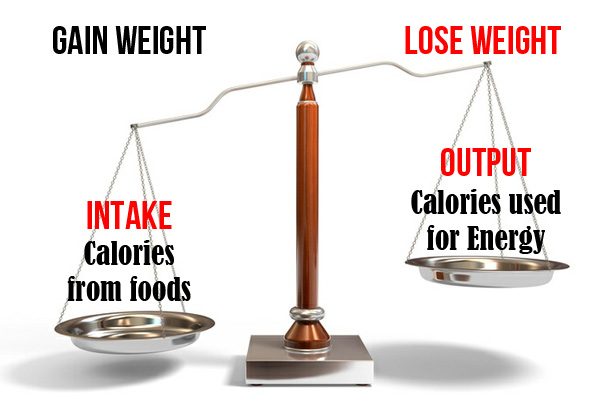
A hard truth about being overweight
First of all, a hard truth: if you are overweight it means you are eating too much. Now, mind my words. I didn’t say you are eating a lot, I simply said you are eating too much. Let’s start from the beginning.
Food is our source of energy
It is the fuel that allows us to perform every task: from basic ones such as breathing, pumping the blood around the body and walking around to complex ones such as carrying the TV up the stairs or running when you're late for the bus.
Our bodies are efficient machines. We come from a time when food was scarce and reducing waste was key to survival.
Fat is the way your body stores extra energy
When you eat more than what your body needs, your brain doesn't go " oh well, this is extra, i don't need it-let's get rid of it ". What your brain thinks is "Fantastic! Extra energy! Let me store this in case tomorrow you won't be able to hunt a bison down so we can use this energy instead"Your body then proceeds to process that extra food and transform it into fat, which then gets stored under your skin a bit all around your body: your gut, (man) boobs, bum, legs and face.You see, your brain doesn't see fat a bad thing. It sees it as a fantastic way to ensure survival in case you won't be able to find food in future.The good news for weight loss
The good news is the reverse process also applies and it's also very efficient: if you don't introduce enough fuel (energy/food), your body will promptly go and take it from its fat reserves.It is good news because there is no way around it: follow this simple principle and you can not lose weight.Step 1: Understand The Caloric Deficit
We keep talking about energy and fuel because it’s an easy way to picture
it. In science, this has a name which is CALORIE. A calorie is a unit of
measure of energy. So you can replace everything you read as “fuel” in the
paragraphs above with “calorie” and it will still be exact.
And why is this important? Because we can calculate it and plan our weight loss around it!
A Caloric Deficit represents the amount of calories that your body doesn’t get through food and has to go and find in its fat storage… (almost) literally burning it.
It’s actually very easy: eat
less calories than the calories you burn and you will shed fat away.
Step 2: Calculate your basal metabolic rate

The Basal Metabolic Rate (BMR) is simply the amount energy (calories) you
burn each day at rest. Even when you think you aren’t doing anything, you are
using energy to breathe, move around, and keep your muscles active.
The BMR varies by individual and depends on a lot of factors such as gender, height, weight, body composition (fat vs. muscle)…
There are many formulas to calculate your BMR and you can find a good calculator here: http://www.bmi-calculator.net/bmr-calculator/
Let’s use me as an example. I am a 34 year old male, 6.2” for 185 lbs
weight. My BMR is 1927 calories per day.
That means that if I do nothing all day and I eat 1927 calories, I will neither gain nor lose weight. But we do indeed do something every day. Just walking around and moving will put me more or less at 2,200 calories (use the link above to calculate your values!).
So if I want to lose weight, I have two choices:
1. Eat less THAN 2,200 calories
2. Be more active and consume MORE than 2,200
calories
Step 3: Use Running to Increase Your Caloric Deficit

Running is a calorie-consuming activity. When you run you contract and
release many muscles – in the legs, feet, and arms… your heart rate goes up to
keep feeding oxygen and nutrients (through the blood) to the muscles.
Do you remember the caloric deficit? By running you increase the
calories you burn during the day. This is a ballpark figure, but it’s
estimated that running 1 mile burns 150 calories (it’s a very average
value and depends on many factors including your weight, running efficiency…).
So if I run 3 miles a day I will burn an extra 450 calories each day. It
means if I keep eating the same I will lose weight!
How much weight? It is calculated that 1 pound of fat equals 3,500
calories. 1,800 calories a week (running 3 miles a day 4 days a week) means
half a pound of fat per week. This if you eat to your daily caloric need.
Chances are, if you are overweight, you eat more than that already. Is it less than you were hoping? Don’t worry, you can lose more.
Step 4: Avoid these Mistakes
In the beginning the amounts of calories you will be burning is going to
be low. And you will be very tired, because running is an effort that you are
not used to.
You will feel like you spent more energy than you actually did.
Remember. One 3-mile run will burn 450 calories (approximation!). After
the run you think “I need to re-hydrate, let me have a Gatorade”. A bottle of
Gatorade has 300 calories. Does it make sense to run 3 miles to only reap the
benefit of 1 of them? Energy drinks have a place, but when you run less
than 1 or 2 hours, stick with water.
Also, many people think “Well, I ran this morning, I can treat myself to
a candy bar!” Do you know how many calories in a standard bar of Snickers, Mars
or Lion? Almost 300. Two of your three miles are gone.
If you want to lose weight while running, don’t add calories to your
diet. Not at the beginning.
Slow and Steady wins the (weight loss) race
Running is an amazing way to lose weight, but you need to understand that
you need to build it up. When you start running you probably won’t even be able
to run those 3 miles. Most beginners’ running programs will have you
run-walk 3 times a week for a month before you can run 3 miles.
STICK TO IT! After all running is an endurance sport and as
such, patience is what brings the best rewards. Don’t rush distances/speeds you
are not ready for yet. They will come and it will all make it better very soon.
More Tips for Successfully Lose Weight with Running
As we said before, your running condition will improve with time and
three things will happen:
1. You will be able to run further
In just a couple of months you will be able to run 8 miles in one
session. Run 3 times a week for 8 miles each session and your weekly calorie
expenditure will be 3,600 calories or a full pound of fat!
2. You will be able to run faster
Running faster will make you burn MORE calories per each mile.
3. You will put on muscle
Remember your BMR (Basal Metabolic Rate)? It’s higher when you have more
muscles. That is because muscles are alive and need constant feeding just to be
maintained, while fat just sits there.
Running will slowly but surely build muscles – especially in your legs. These
muscles will consume extra calories even when you are not running, just because
they are there!
To summarize: running is very hard at the beginning and you
might not see results for a while (in terms of weight loss, but of course
things like your cardio efficiency will be immediately and noticeably better).
But keep running and in just a few months you will be a fat burning machine!
What to eat?
I am not a cook, but in our household we started cooking some of the
recipes from the Metabolic Cookbook by Karine Losier. They’re easy to
cook, tasty and with a decently low amount of calories – we don’t see it as a
diet, just food to cook for the family. Try it out!
Last word of advice: don’t take shortcuts
1. Running is a taxing sport for your body. If you
aren’t patient and increase mileage/speed too fast you can get injured. This
means pain, no running and no weight loss.
2. Decreasing your caloric intake is a good step, but
don’t take it too far. You can easily and healthily burn 2-3 pounds of fat a
week. But if you keep underfeeding your body, your brain will start breaking
down the muscles instead of the fat (the logic is “we don’t have enough energy
to survive! Let’s cut down those high-maintenance muscle fibers!”).
 Posted in:


0 Comments:
Post a Comment